

NeuroHarmonics to Begin First Patient Trial of Non-Invasive Deep-Brain Ultrasound for Essential Tremor
September 8, 2026
UCL spinout receives MHRA and ethics green light for the study at University College London Hospitals NHS Foundation Trust (UCLH), backed by £1.2 million of Innovate UK funding as part of the Biomedical Catalyst.
LONDON, 8 September 2026 — NeuroHarmonics will begin recruiting in the coming weeks for the first patient trial of its non-invasive deep-brain ultrasound platform, in people with essential tremor, at the National Hospital for Neurology and Neurosurgery (NHNN) within UCLH. The company today announced that the study has received a letter of no objection from the Medicines and Healthcare products Regulatory Agency (MHRA) and a favourable opinion from a Research Ethics Committee, alongside £1.2 million of Innovate UK funding as part of the Biomedical Catalyst.
NeuroHarmonics spun out of UCL, building on a decade of the founders' research in biomedical ultrasound. Since then, the company has designed and built an entirely new platform in-house, and has taken it through device testing with healthy volunteers to the start of its first study in patients.
Essential tremor is one of the most common movement disorders, affecting around 1% of the general population and around 5% of people over 65 (more than 600,000 people in the UK). It disrupts everyday actions such as writing, eating, and drinking, and first-line medications adequately control symptoms in only around half of patients.
For those who need more, the brain target is well established. Deep brain stimulation (DBS), which requires neurosurgery and an implant, and MRI-guided focused ultrasound (MRgFUS), which creates a small permanent lesion, both act on the same small structure in the thalamus and are effective for appropriately selected patients. But they are delivered at a small number of specialist centres, and only around 200 patients a year in the UK receive either procedure. NeuroHarmonics was created to develop and clinically evaluate a non-invasive alternative route to the same target.
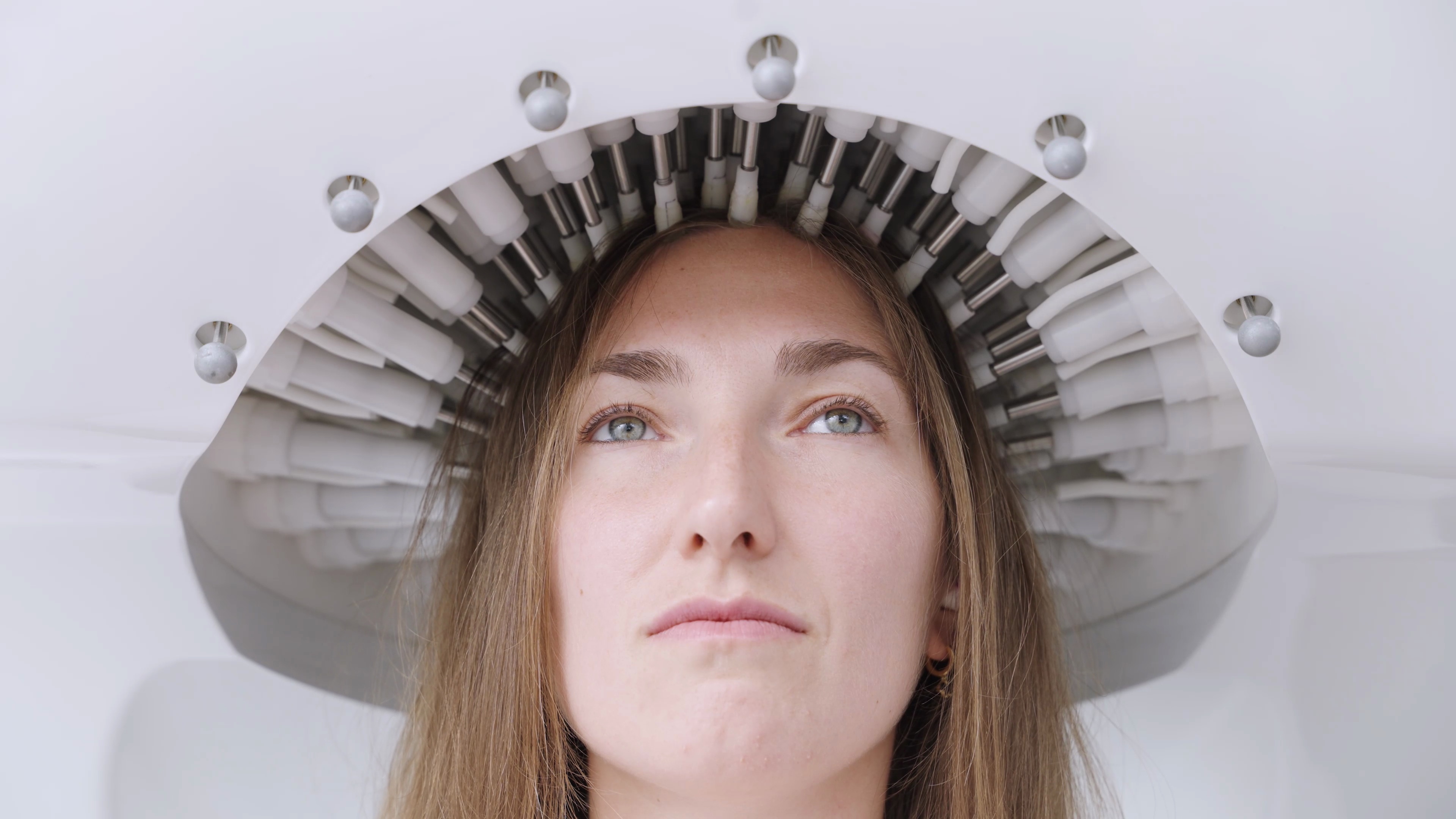
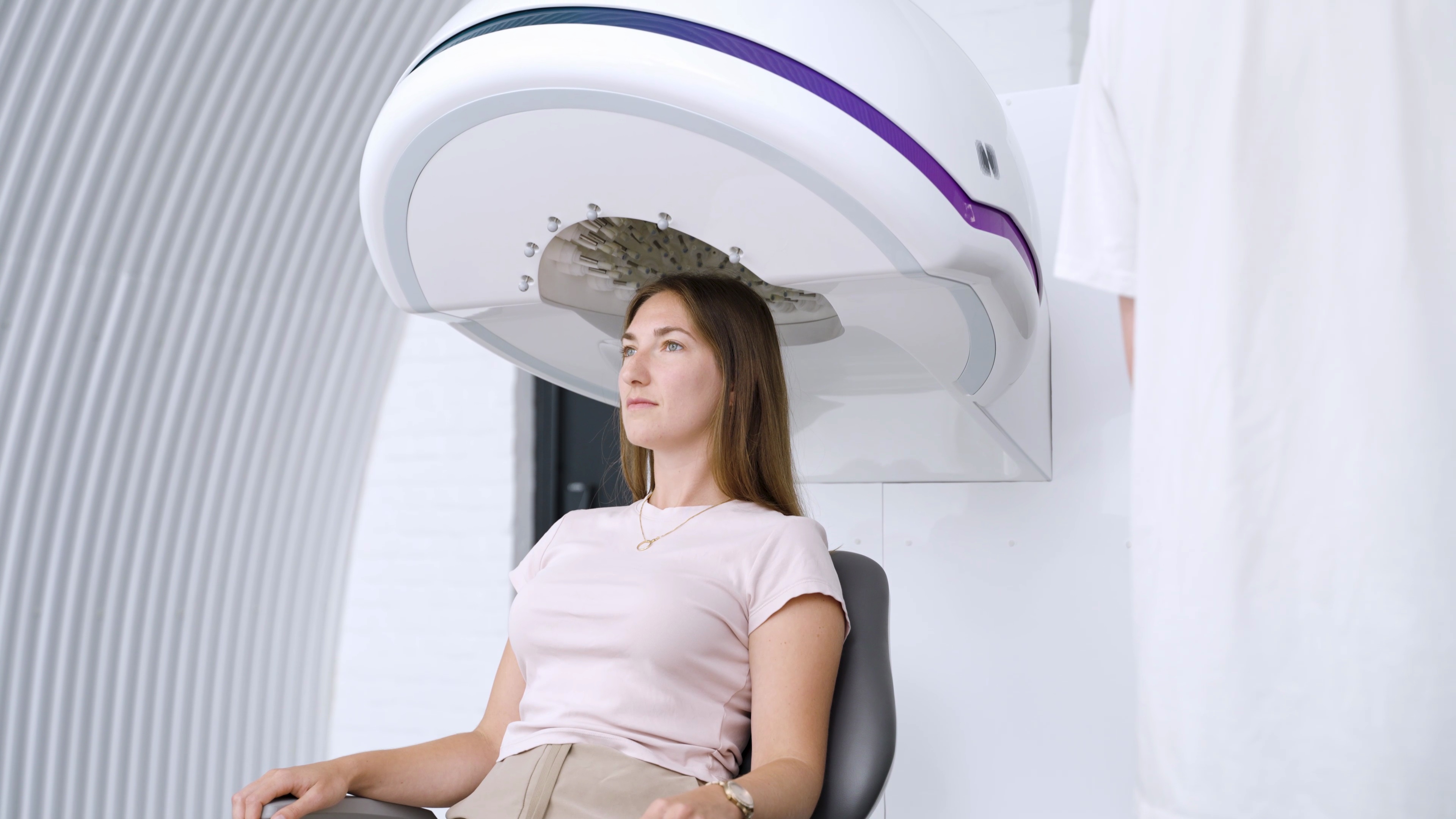
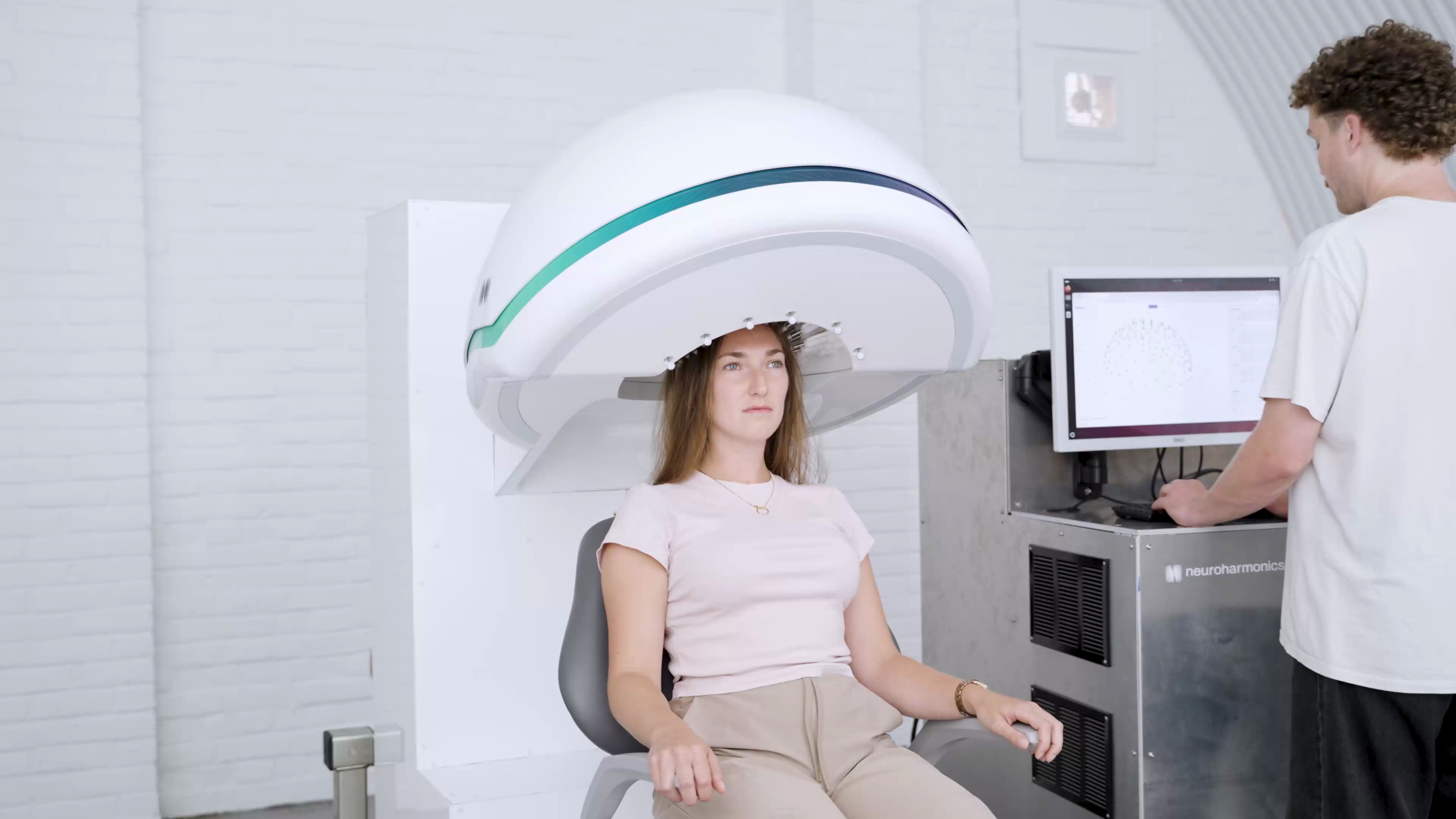
The company's platform is designed to focus low-intensity ultrasound through the intact skull onto targets a few millimetres wide, deep in the brain, guided by each participant's own MRI scan and computational models of how sound travels through their skull. Sessions are intended for an ordinary outpatient setting, with the participant seated in a chair: no surgery, no implant, no anaesthesia, and no head shaving. The stimulation is non-ablative, meaning it does not destroy tissue, and is built to be repeatable.
The approach grows out of the founders' research at UCL, including a study published in Nature Communications that demonstrated selective stimulation of a single structure deep in the human brain, roughly the size of a pea, with millimetre precision. That earlier research system required head shaving, mask fixation and an MRI scanner. The new platform requires none of these.
The clinical investigation is sponsored by NeuroHarmonics and led by Chief Investigator Dr Anna Latorre, who is a Consultant Neurologist at the NHNN and Honorary Associate Professor at the UCL Queen Square Institute of Neurology. It will enrol adults whose essential tremor is not adequately helped by, or who are unable to take, first-line medication, at the NIHR Clinical Research Facility: UCLH site based at the NHNN, known as the Leonard Wolfson Experimental Neurology Centre (LWENC).
In a sham-controlled study (a placebo-style comparison in which participants cannot tell whether stimulation is active), the platform will stimulate the ventral intermediate nucleus of the thalamus, the same target used by DBS and MRgFUS, while tremor is measured using movement sensors. The aims are to assess safety and tolerability, and to look for preliminary evidence of target engagement: confirmation that the device is reaching and influencing its target. Any effects on tremor are expected to be temporary, and the study is not designed to establish clinical efficacy.
The Innovate UK funding as part of the Biomedical Catalyst supports the first patient study, further development of the platform, and a follow-on study involving repeated stimulation sessions.
"Ultrasound lets us focus energy deep into the brain with millimetre precision, without surgery. The challenge has always been engineering a system that makes this simple: something a person can sit down in, with no head shaving, no fixation, and no scanner," said Dr Bradley Treeby, CEO and co-founder of NeuroHarmonics, and Honorary Professor of Biomedical Ultrasound at UCL. "In just 12 months, our team designed and built a completely new platform to do exactly that. Taking it into patients is the moment everything we have built gets its first real test."
"Essential tremor can have a profound impact on people's independence, work and quality of life," said Dr Tabish Saifee, Medical Director of NeuroHarmonics and Consultant Neurologist at the NHNN. "Medication only helps some patients, but for a significant proportion it either doesn't adequately control their tremor or causes unacceptable side effects. There remains an important treatment gap for people with disabling tremor who need something more, but for whom an invasive or ablative procedure isn't the right option."
"This first study is designed to assess the safety and tolerability, and whether we can measure an effect on tremor when the target is stimulated," said Dr Anna Latorre, the study's Chief Investigator. "If it can do that, it lays the groundwork for larger studies that will tell us what this approach could offer patients."
NeuroHarmonics was established with the support of UCL Ventures, UCL's commercialisation company. Dr. Weng Sie Wong, Senior Business Manager at UCL Ventures, added: "NeuroHarmonics is a powerful example of what can happen when world-class research is combined with the right commercialisation support, expertise and investment. Reaching a first patient study for such a prevalent condition is a significant milestone, not only for the company but for the people around the world who could ultimately benefit from this technology."
NeuroHarmonics is backed by Speedinvest, UCL Technology Fund, Fusion Fund, and Jumpspace Ventures. Essential tremor is the company's first clinical application of a platform intended to reach deep brain targets implicated in a broad range of neurological and psychiatric conditions.
ENDS
Notes to editors
About NeuroHarmonics
NeuroHarmonics is a London-based neurotechnology company founded on a simple observation: the brain's most powerful treatment targets are its least accessible. The company is building a platform that uses low-intensity focused ultrasound to reach and influence deep brain circuits without surgery, implants or head preparation. https://neuroharmonics.com
The NeuroHarmonics platform is an investigational medical device, for use in approved research and clinical investigations only. It has not been approved, cleared, or certified for commercial sale or general clinical use. Safety and effectiveness have not been established.
About the study
A first patient study of transcranial ultrasound stimulation of the ventral intermediate nucleus of the thalamus in essential tremor: single-centre, sham-controlled, in adults aged 18–80 whose tremor is not adequately helped by, or who are unable to take, first-line medication. Primary endpoints are safety and tolerability, and preliminary evidence of target engagement, measured as the change in tremor (recorded by movement sensors) compared with sham stimulation.
Chief Investigator: Dr Anna Latorre. Sponsor: NeuroHarmonics. Site: UCLH NHS Foundation Trust. It forms part of the programme "Non-invasive deep-brain ultrasound neuromodulation for treatment-refractory essential tremor", supported by Innovate UK funding as part of the Biomedical Catalyst.
Low-intensity transcranial ultrasound stimulation has been studied in more than 700 participants in published human research. This study is the first evaluation of the NeuroHarmonics device in patients. The protocol was shaped by patient and public involvement with people living with essential tremor. Enquiries about taking part are handled by the clinical team at NHNN.
About the Leonard Wolfson Experimental Neurology Centre within the NIHR Clinical Research Facility: UCLH
The Leonard Wolfson Experimental Neurology Centre (LWENC) within the National Hospital for Neurology and Neurosurgery, Queen Square is part of the NIHR Clinical Research Facility: UCLH. LWENC specialises in delivering early phase including first-in-human trials in a broad range of neurological disorders, including Alzheimer's, Huntington's and Parkinson's disease, movement disorders such as essential tremor, as well as motor neurone disease and other neurodegenerative conditions.
About Innovate UK
Innovate UK is the UK's innovation agency. We back deep tech businesses in the UK's priority sectors for national benefit, supporting their journey from startup to scaling business to industry leader. We provide the funding, expert support and connections to help breakthrough ideas reach their potential, improve lives and drive economic growth. Innovate UK is part of UK Research and Innovation.
About University College London (UCL)
UCL is a global top 10 university, set up in London 200 years ago to offer education for all. Today, we gather 60,000 staff and students, from over 150 countries, to create a unique city within a city – a research and innovation powerhouse that leads the world in subjects spanning the arts, sciences, technology and the humanities. We've nurtured 33 Nobel Prize winners, because here, brave ideas have the scale and the support they need to succeed. We are University College London. And here, it can happen.
UCL turns 200 in 2026. Join us for a year of bicentennial events and celebration. www.ucl.ac.uk
Images
The following images are free for editorial use in coverage of NeuroHarmonics with the credit "Image: NeuroHarmonics".
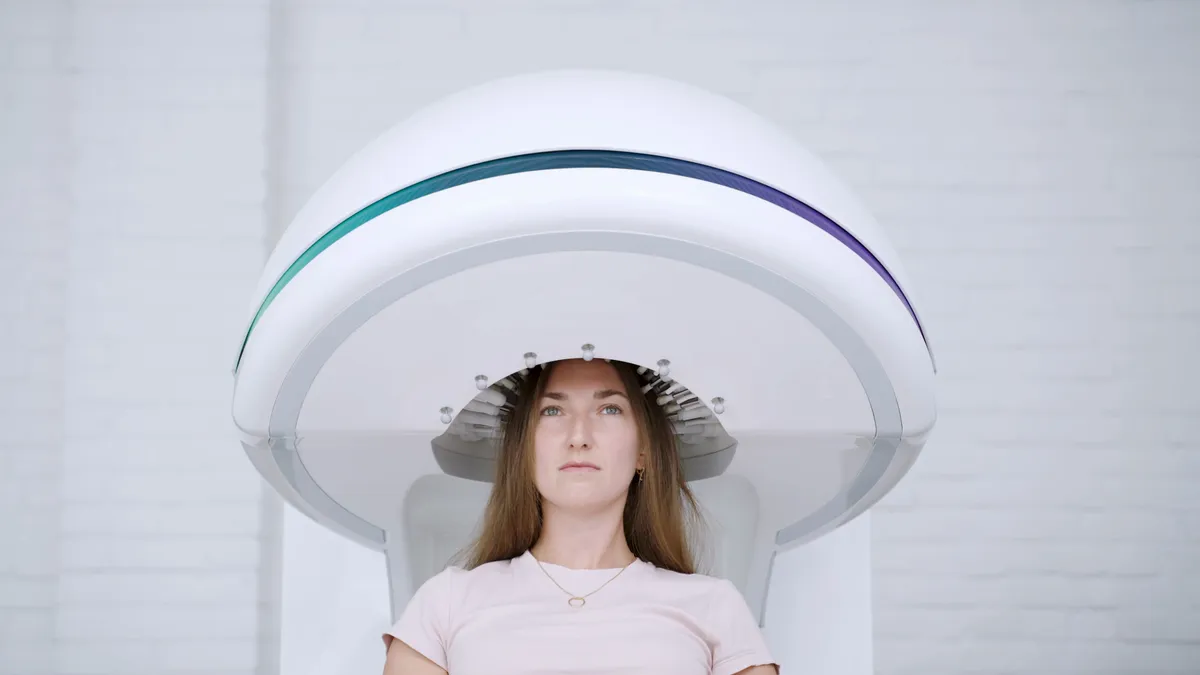
A volunteer seated in the NeuroHarmonics non-invasive deep-brain ultrasound platform at the company's London facility. The helmet-shaped system is designed to deliver focused ultrasound through the intact skull, with no surgery, implants or head shaving. Download
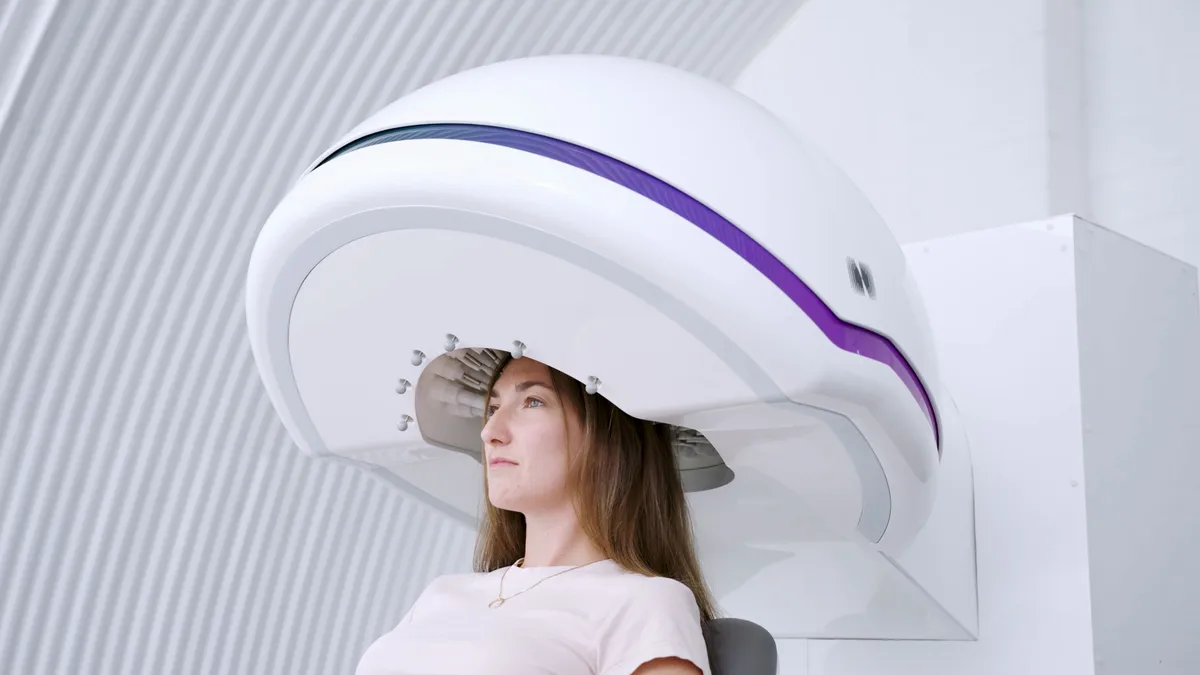
The NeuroHarmonics platform positions an array of individually controlled ultrasound transducers around the head while the person sits in an ordinary chair. Download
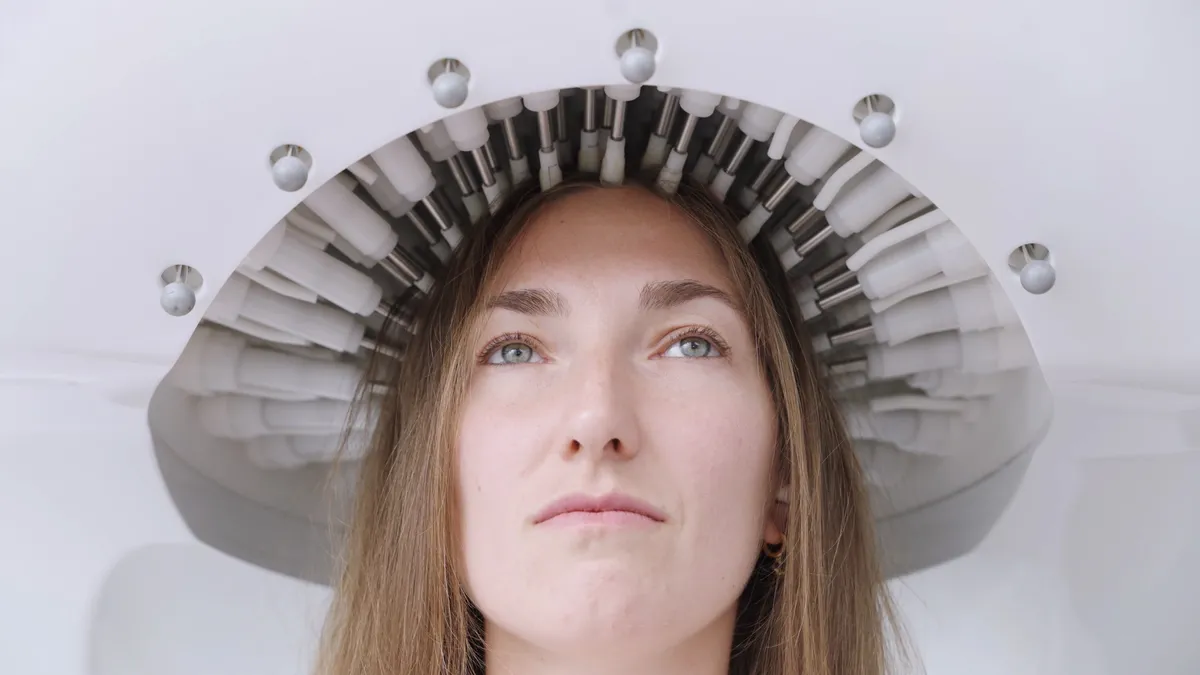
The platform is designed to make acoustic contact directly through the hair, so no head shaving or preparation is required. Download
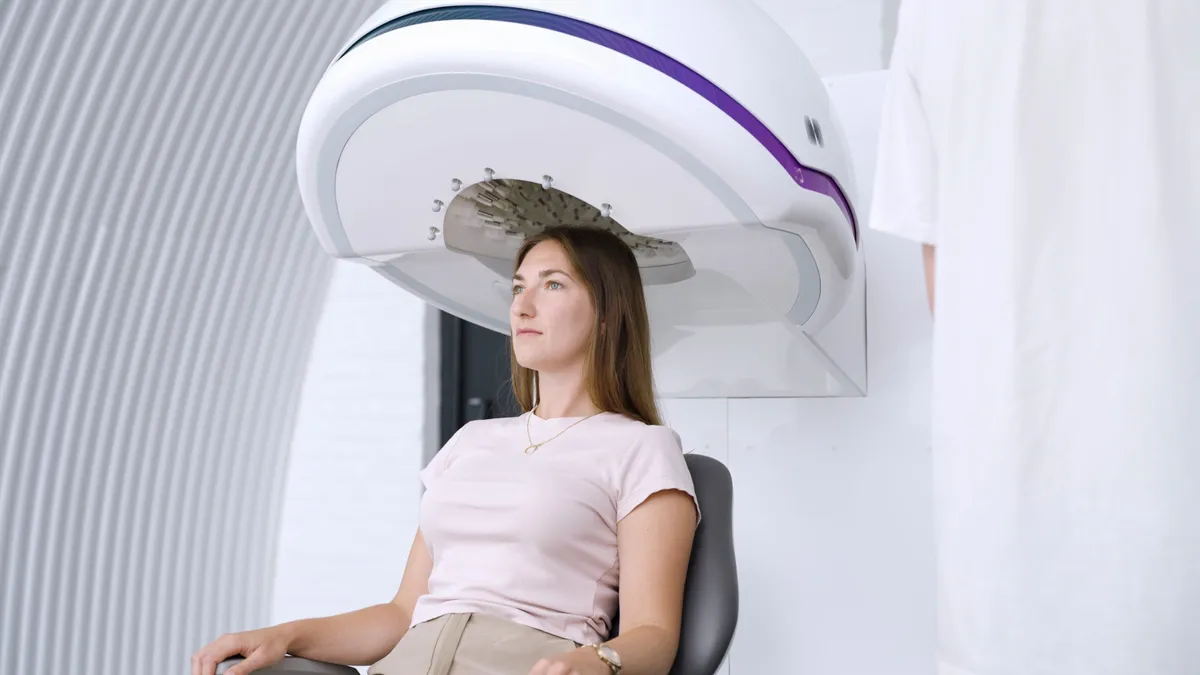
The transducer array is positioned over the head at the start of a session. Sessions are designed for an ordinary outpatient setting. Download
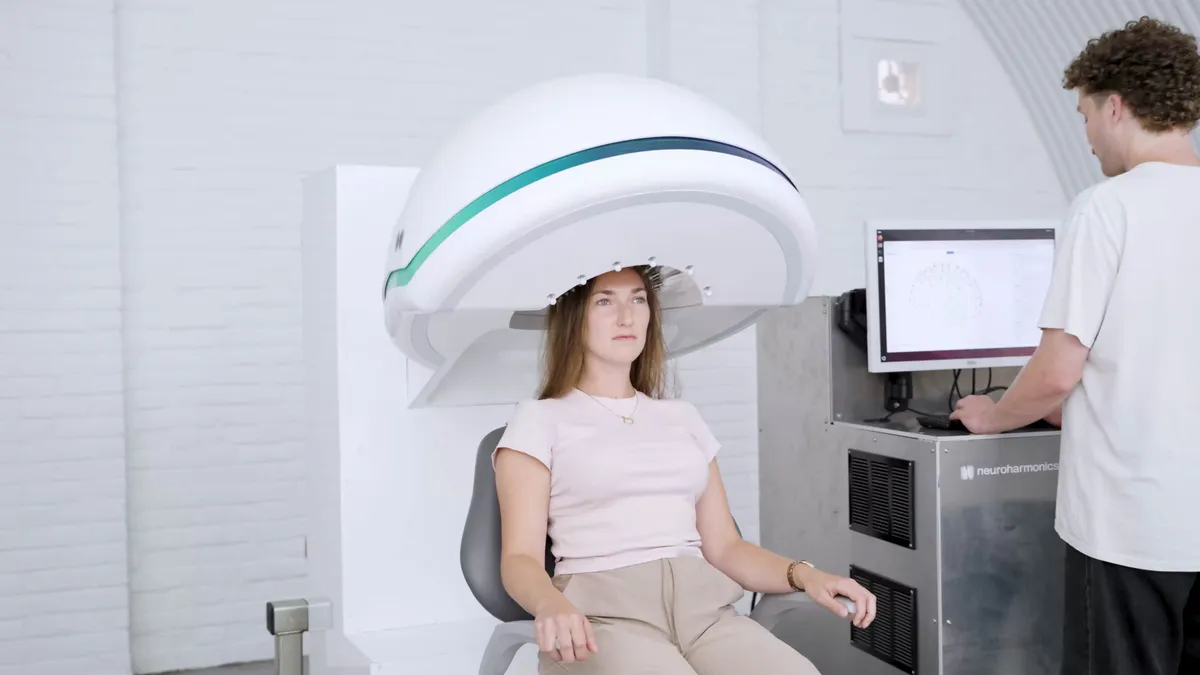
A NeuroHarmonics engineer operates the platform from its control console during device testing at the company's London facility. Download
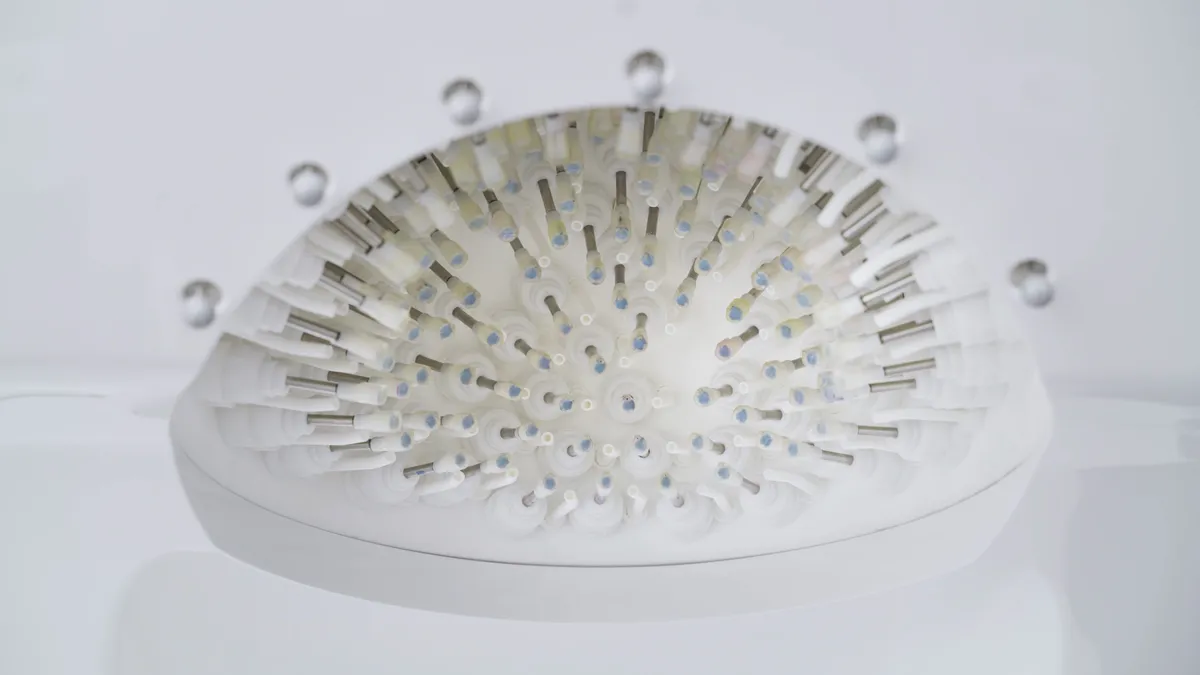
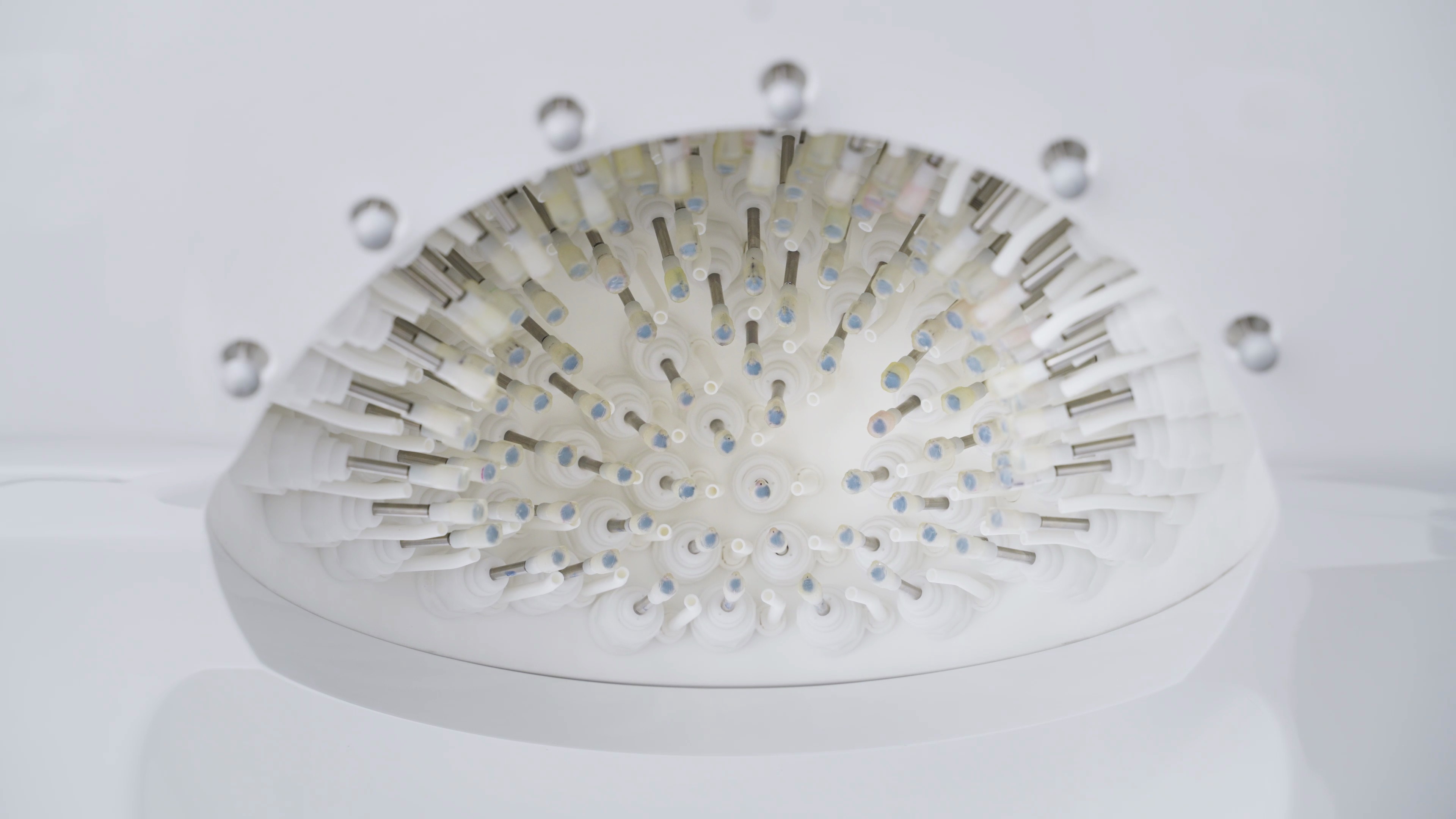
Looking up into the platform's helmet: individually actuated ultrasound transducer modules focus low-intensity ultrasound through the skull onto targets a few millimetres wide, deep in the brain. Download
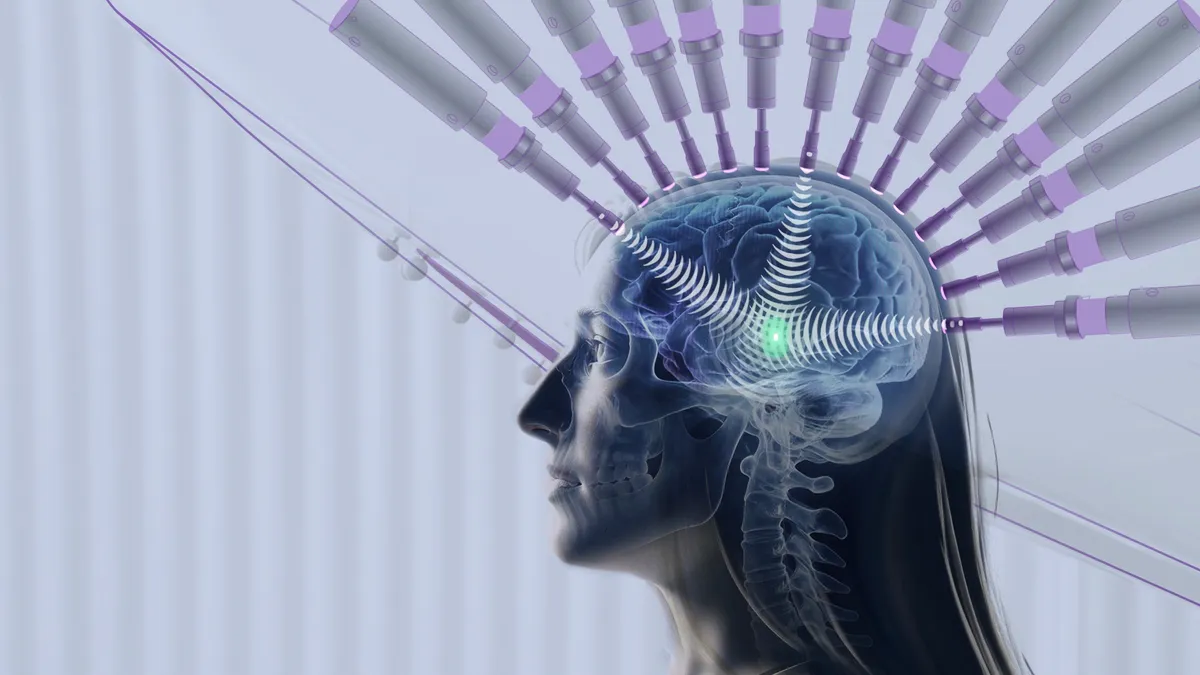
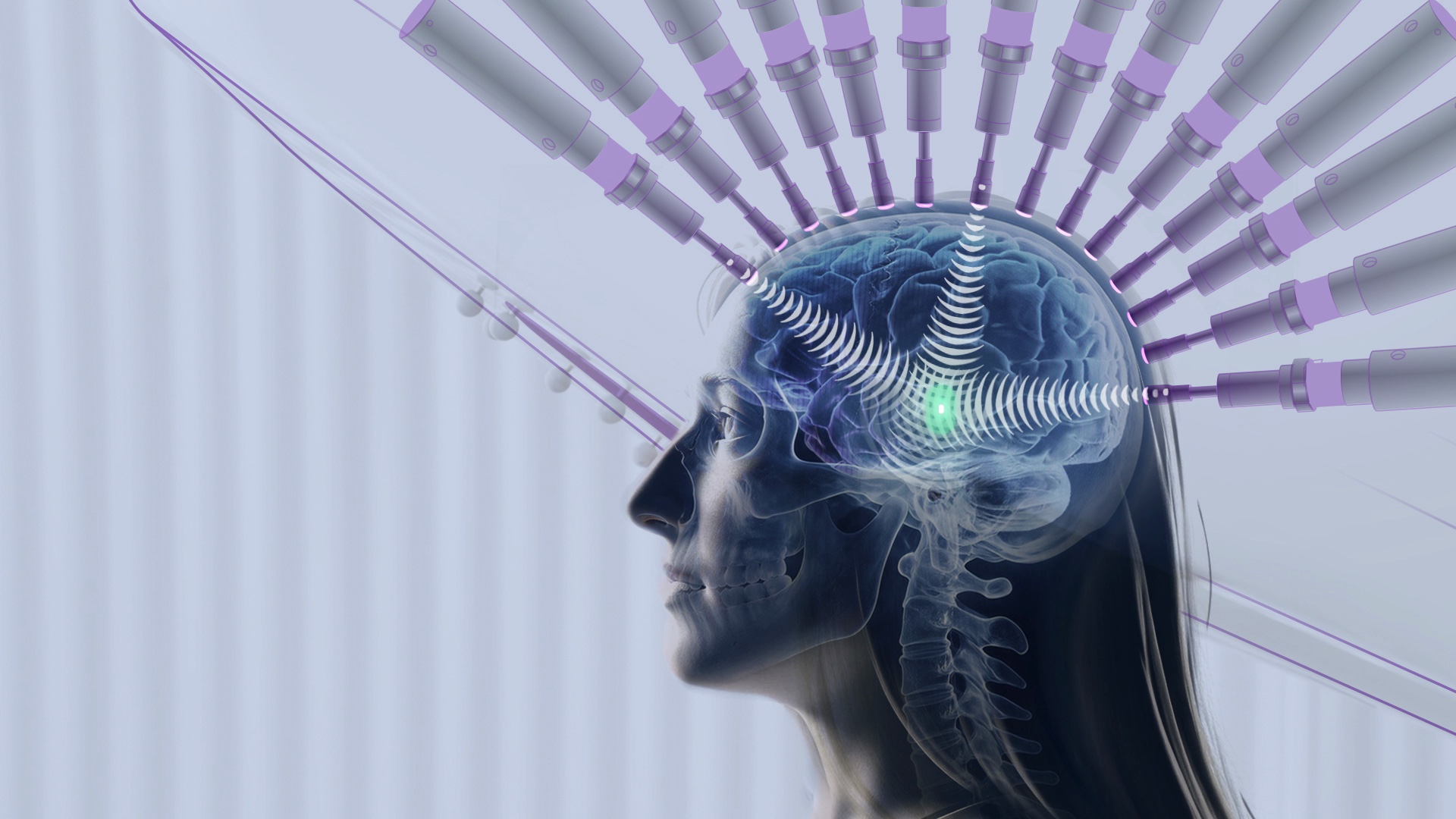
Artist's impression: ultrasound waves from an array of transducers pass through the skull and converge on a small target deep in the brain. Illustration, not to scale. Download
Media contact
For more information or to speak to the researchers involved, please contact contact@neuroharmonics.com.